

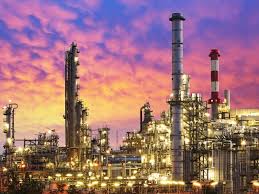
The Dangote Petroleum Refinery has officially crossed a major operational threshold, processing 700,000 barrels per day (bpd) during performance testing. By outperforming its initial 650,000 bpd design capacity and breaking ground on a massive second crude processing unit, the facility is successfully engineering a historic economic reversal: transforming Nigeria from a vulnerable, structurally dependent fuel importer into Africa’s dominant downstream energy hub.This strategic pivot alters regional geopolitics, reshapes Atlantic Basin trade flows, and demonstrates the immense viability of privately financed mega-infrastructure on the continent. The facility achieved 700,000 bpd during optimization tests supervised by its technology licensors, proving its structural elasticity. Ground has been broken on a second 700,000 bpd unit at the Lekki Free Zone. This expansion targets a total capacity of 1.4 million bpd within the next 30 months.Intense conflict in the Middle East and maritime bottlenecks in the Strait of Hormuz have forced global buyers to seek alternative seaborne sources. Reshaping Regional and Global Trade Flows European Refineries Exported to West Africa For decades, West Africa relied heavily on fuel imported from northwestern Europe’s refining hubs. Dangote’s massive output has sharply cut regional import requirements.The refinery has already dispatched massive cargo volumes of Euro V-standard petrol and diesel. Deliveries are actively supplying markets in Côte d’Ivoire, Ghana, Togo, Cameroon, and Tanzania.Leading Global Jet Fuel Exports: Driven by soft domestic demand, the refinery exported up to 100,000–160,000 bpd of aviation fuel at its peak. This briefly made it the largest exporter of jet fuel in the world, supplying critical volumes directly to Europe.Securing Global Footprints: Standard gasoline and petrochemical cargoes have expanded beyond African borders. Consignments are consistently arriving in the United States, Saudi Arabia, and several EU nations. Relieving Macroeconomic PressureThe facility fundamentally alters Nigeria’s fiscal health. It dramatically reduces the country’s multi-billion dollar annual reliance on fuel imports. This structural change significantly eases chronic demand pressures on domestic foreign exchange reserves. Re-writing African Downstream LogicCapital has historically concentrated strictly on upstream crude extraction. The success of the Dangote megaproject proves that complex, multi-billion-dollar domestic refining is highly viable. This success paves the way for deeper regional manufacturing and industrial supply chains. Expanding the Corporate EcosystemThe downstream buildout acts as an anchor for broader industrialization. The complex is aggressively scaling up its integrated fertilizer operations. It aims to increase output from 3 million tons to 12 million tons of urea annually, positioning it to capture the top spot globally.Preparing for Global Capital MarketsTo cement its long-term financial positioning and fund its vast feedstock requirements, the group is aggressively preparing for public listings. Dual-listing procedures are being actively organized on both the London Stock Exchange (LSE) and the Nigerian Exchange (NGX). Despite hitting full capacity, local retail consumers continue to deal with high domestic pump prices. This tension stems directly from the ending of exclusive state purchase agreements and the total elimination of federal fuel subsidies.Operating a complex at this scale requires an uninterrupted stream of crude. Dangote has had to secure supply agreements with both local producers and international commodity trading firms to guarantee consistent http://throughput.Energy analysts point out that while regional seaborne gains are undeniable, it is still too early to confirm whether these shifting trade lanes represent a permanent, long-term structural break in global oil trade patterns.
Note by Alessandro Bazzoni