

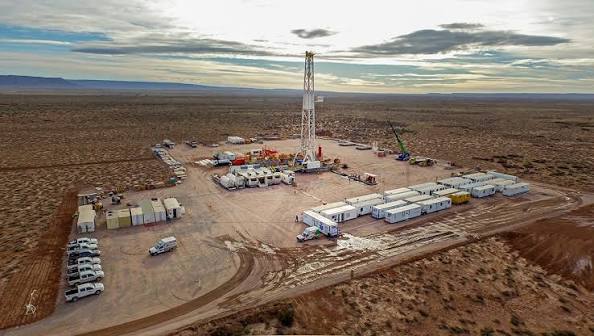
Argentina’s Vaca Muerta shale formation has officially reached a historic inflection point, transitioning from an emerging regional asset into a global energy powerhouse. Spurred by pro-market reforms under the Milei administration and a global push for conflict-free energy corridors, the basin is moving from early-stage exploration into full-scale, industrialized manufacturing mode. Driven primarily by these shifting operational dynamics, Argentina’s total crude production has surged past 865,000 barrels per day (bpd), positioning the country to break its all-time record and breach the 1 million bpd milestone ahead of schedule.
The Three Pillars of the Inflection PointThe transformation of Vaca Muerta relies on three core operational and macroeconomic shifts:Midstream Infrastructure Breakthroughs: Historically, production was constrained by bottlenecked pipelines. The $2 billion Vaca Muerta Oil Sur (VMOS) pipeline project is actively under construction, unlocking an export capacity of 180,000 bpd by late 2026 and eventually expanding to 550,000 bpd toward the Atlantic coast.Industrialized Technology Deployment: Major oilfield service providers are introducing top-tier technical tools outside North America for the first time. For example, Halliburton’s deployment of its advanced ZEUS electric fracturing technology confirms the basin has achieved the factory-model efficiencies typically seen in the US Permian Basin.Regulatory and Macroeconomic Tailwinds: The implementation of the RIGI (Incentive Regime for Large Investments) framework has triggered roughly $60 billion in long-term project applications. This legal stability has flipped Argentina’s historic energy trade deficit into a projected $14 billion energy surplus for 2026.
Upstream Consolidation AcceleratesTo handle this scale, the corporate landscape is rapidly consolidating. Driven by state-run YPF alongside independent giants like Vista Energy, operators are executing major asset swaps to secure continuous blocks of acreage. For instance, Vista’s recent $1.1 billion acquisition of Equinor’s onshore assets underscores a broader trend: fewer, highly capitalized operators are taking control of the basin to minimize development costs and maximize long-term export infrastructure.
Note by Alessandro Bazzoni