

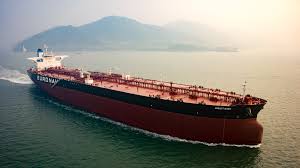
A high-value Very Large Crude Carrier (VLCC) deal in the Middle East Gulf collapsed on April 9, 2026, as uncertainty surrounding the Strait of Hormuz intensifies despite a recently announced ceasefire.
Tradewinds News
Tradewinds News
+1
Key Developments:
Deal Collapse: A Heidmar-controlled VLCC, the Asian Lion (297,600-dwt, built 2009), was reportedly booked by ST Shipping & Transport (a Glencore subsidiary) at a massive $395,000 per day, but the fixture was subsequently placed in doubt, according to reports from Tankers International and Reuters.
Iranian Action: The collapse followed Iran’s decision to block tanker exits through the Strait of Hormuz, in response to Israeli actions in Lebanon, directly contradicting hopes that a US-brokered ceasefire would immediately normalize shipping, says TradeWinds.
Charterer Scramble: Despite the high risks and costs, charterers are urgently seeking “prompt” (immediate) loadings to secure oil supply, causing extreme volatility, according to TradeWinds.
Strait of Hormuz Gridlock: As of early April, around 3,200 commercial ships and 20,000 seafarers are stranded west of the Strait of Hormuz, unable to transit due to the selective toll system imposed by Iran, says House of Saud.
Alternative Routes: The crisis is forcing a “scramble for non-Middle Eastern barrels,” with tankers fleeing to other regions, according to Lloyd’s List.
First VLCCs fixed in the Gulf for big rates as charterers scramble …
This situation marks an abrupt reversal after initial optimism that the ceasefire would reopen the region to commercial shipping, leaving tanker owners and operators navigating high uncertainty, insurance fees, and Iranian transit tolls.
Some 200 internationally trading crude oil tankers and product tankers are effectively stranded in the Gulf following a total halt of vessel movements through the Strait of Hormuz, triggering sharp disruption across global crude and product markets
According to Lloyd’s List Intelligence data, most vessels are at anchor while owners and charterers await clarity on transiting the chokepoint
Congestion is most acute among VLCCs with 60 compliant vessels currently inside the Gulf, representing nearly 8% of non-sanctioned VLCCs.
Among shipowners, South Korea’s Sinokor appears most exposed with six VLCCs in the region while in the suezmax segment Greek owners feature most prominently.
The congestion is most acute among very large crude carriers with currently 60 VLCCs inside the Middle East Gulf, with 13 alongside loading terminals. A further 33 vessels are at anchor, while 14 are understood to be slow steaming as owners and charterers deliberate their next move.
The 60 VLCCs represent almost 8% of the global, compliant, VLCC fleet.
In the suezmax segment, 23 vessels remain in the Middle East Gulf. Of these, five are berthed, while the remainder are either anchored or proceeding at reduced speeds pending operational decisions.
The aframax/long range two class accounts for 30 ships in the region, with eight currently alongside oil terminals. Medium range tankers represent the largest concentration, with 64 vessels present, while long range one tankers total 22 ships.
Beyond VLCCs, in the suezmax segment, Greek shipowners are heavily represented. According to data from Lloyd’s List Intelligence, both Dynacom Tankers Management and Polembros Shipping each have three suezmax tankers stationed west of the Strait of Hormuz as of today.
There is now likely to be a scramble for alternative non-Middle Eastern barrels which should see available tankers chartered regardless of the freight costs. It could also lead many charterers to look to secure available tonnage under long-term time charter,” BRS said.
BRS highlighted that VLCCs, which transport the largest share of crude exports from the Gulf region, are expected to be among the most affected segments. Long range two product tankers, responsible for hauling the bulk of clean petroleum products, could also see significant market disruption amid concerns surrounding the Strait of Hormuz.
“Considering the shortage of available, alternative refined product supplies, the impact on clean tanker markets is harder to gauge. However, there should be a scramble for tonnage, although this is unlikely to be to the same extent as for crude tankers and may be slightly nuanced depending on region,” said BRS.
“All told, and considering the fluidity and uncertainty of the situation in the Middle East, perhaps the most likely immediate-term outcome for tanker markets is an injection of unprecedented volatility.”
In the LR2 segment, Greek owners dominate and include vessels owned by Dimitris Prokopiou’s Centrofin, the Peraticos family’s Pleiades Shipping and Neda Maritime Agency.
But China’s Cosco stands out as the single most exposed player, with three LR2s currently positioned in the Gulf.
Note by Alessandro Bazzoni