

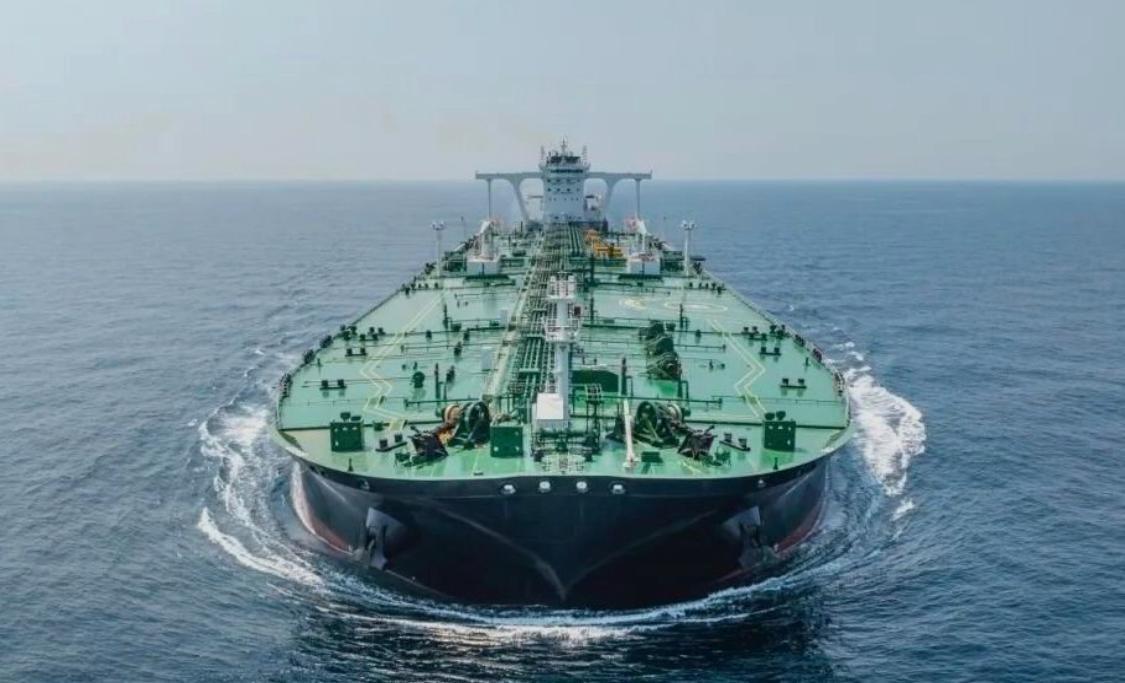
Clarksons Securities has reshuffled its tanker rate averages to reflect the dramatic shift in global oil trade routes caused by geopolitical conflict .While Clarksons will continue to quote the traditional Middle East Gulf to China route, it is recalculating its broader Very Large Crude Carrier (VLCC) averages to better align with current market realities .
The war has heavily restricted vessel transits through the Middle East, forcing a recalculation of how average spot earnings are weighted and assessed .
Escalating conflict in the region caused transits through the critical Strait of Hormuz chokepoint to plummet .
A crackdown on substandard shadow fleet vessels by countries like China and India is actively pushing more cargo toward mainstream, compliant tonnage .
Analysts, led by Frode Morkedal at Clarksons Securities, have noted that a reduction in the shadow fleet can meaningfully tighten market fundamentals and boost utilization for mainstream owners
Leading up to the current conflict, Clarksons Securities tracked massive surges in the market . Earlier in the year, top spot rates for Very Large Crude Carriers (VLCCs) delivering into Singapore spiked above $130,000 per day .
According to data tracking the Baltic Exchange’s implied timecharter equivalent (TCE), VLCC rates experienced wild fluctuations, at points spiking close to $170,000 per day based on physical scarcity before cooling down .
While nearby physical spot rates have been incredibly high, Forward Freight Agreements (FFAs) for the Middle East to China route (TD3) show that traders expect a softening of rates toward the middle and end of 2026 as winter demand wanes and assuming some market normalization .
Projected Impact of a Ceasefire
Industry analysts at S&P Global and various risk intelligence firms highlight that a ceasefire will not immediately result in a plunge to pre-war shipping norms . The projected impacts include:
Analysts note that over 800 ships have been heavily restricted or effectively trapped in and around the Middle East Gulf . If a permanent ceasefire successfully reopens the Strait of Hormuz, a sudden release of this massive volume of available tonnage could hit the market at once, temporarily weighing down spot rates heavily .
A return to normal export levels will take time . Significant energy and refining infrastructure in the region has sustained damage during active hostilities, meaning Middle East crude and refined product supply will take months to recover even after a true cessation of conflict .
Maritime security experts point out that the current two-week ceasefire window is far too short to clear massive cargo backlogs . Many mainstream shipowners will remain highly hesitant to send multi-million dollar assets back into the Gulf out of fear that hostilities could resume and trap their crews and vessels . This lingering caution will keep actual active vessel supply tight and prevent a rapid collapse in freight rates
Forward Freight Agreements (FFAs) are financial forward contracts used by shipowners and charterers to hedge against future freight rate volatility .
The Massive “War Premium” Spikes: In March 2026, the physical disruption caused by the effective closure of the Strait of Hormuz caused a historic shockwave in the paper market . Clarksons identified a forward contract for a Middle East to China voyage trading at astronomical levels, with implied values crossing $400,000 per day for modern VLCCs based on extreme scarcity .
Backwardation in the Curve: Despite these massive short-term spikes, the broader forward curve for the third (Q3) and fourth (Q4) quarters of 2026 exhibits heavy “backwardation.” This means traders expect future rates to sit considerably lower than the current, highly inflated spot market.
While softening from the conflict peaks, FFAs for the latter half of the year are still pricing in a very healthy floor. Market analysts, such as those at Clarksons Securities, note that even if rates cool significantly, the underlying tight vessel supply will likely keep Q3 and Q4 earnings well above historical mid-cycle averages .
Ton-Mile Demand Shifts: Pushing Cargo to Alternative Routes
Ton-mile demand (the volume of cargo multiplied by the distance it travels) is the ultimate metric for tanker demand . When traditional short routes are blocked, ships must take longer journeys, removing available vessel supply from the market and driving up freight rates.
With transits through the Strait of Hormuz effectively halted or severely restricted during active hostilities, Asian refiners have been forced to source crude from much further away .
To replace lost Middle Eastern barrels, charterers have aggressively pivoted to loading zones in the US Gulf, Brazil, and West Africa . A standard voyage from the US Gulf to China takes roughly double the time of a traditional Middle East to China run, effectively doubling the ton-mile demand generated by that same physical barrel of oil.
This massive shift to the Atlantic basin is soaking up a vast amount of the global mainstream VLCC fleet. According to Clarksons Research, while overall global seaborne trade volume growth has slowed, shifting trade patterns and increased cargo distances have caused ton-miles to dramatically outperform, keeping utilization high even on non-Middle Eastern routes.
\note by Alessandro Bazzoni