

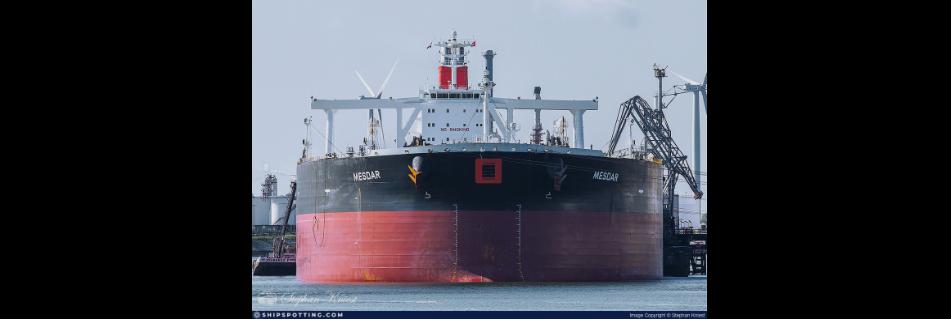
The supply of Suezmax and Aframax tankers in the US Gulf has reached its tightest level ever recorded by shipbrokers as of March 2026. This scarcity is driven by a massive shift in global trade routes following the effective closure of the Strait of Hormuz due to the ongoing conflict between the US, Israel, and Iran.
Key Drivers of Market The transit of crude through Hormuz has collapsed from 20 million barrels per day (bpd) to a mere trickle. This has forced Asian refiners to “scour the world” for alternative supplies to replace lost Middle Eastern barrels.
Refiners in South Korea, China, India, and Thailand are aggressively securing US Gulf Coast crude. To move these barrels quickly, they are increasingly chartering mid-sized Suezmax and Aframax vessels rather than waiting for larger Very Large Crude Carriers (VLCCs).
Panama Canal Transit: In a rare move, shippers are paying high premiums to send medium-sized tankers like the Sea Turtle (Aframax) and Aquahonor (Suezmax) through the Panama Canal to reach Asia faster, despite the higher cost per barrel compared to traditional routes.
Higher earnings in the Atlantic Basin have triggered a “mass migration” of vessels from the Pacific, with ship counts tripling from January 2026 levels as owners chase record-breaking spot rates.
Current Aframax average Time Charter Equivalent (TCE) earnings have spiked into the $140,000–$180,000/day range.
Suezmax tankers are commanding rates as high as $175,000 per day for certain spot fixtures.
The number of available vessels to load in the US Gulf is at an all-time low. Brokers report that even at these extreme prices, securing a prompt vessel is nearly impossible due to the “desperation” of Asian buyers.
Asian refineries, many of which are specifically configured for the medium-sour crude typically found in the Persian Gulf, are struggling to adapt to the lighter grades coming from the US and West Africa. This mismatch is leading to:
Reduced Throughput: Several refineries have begun cutting runs or delaying deliveries due to shortages.
Sky-High Premiums: Refiners are paying unprecedented premiums, with some Asian buyers reportedly paying up to $160 a barrel for certain regional grades to bypass the Hormuz bottleneck