

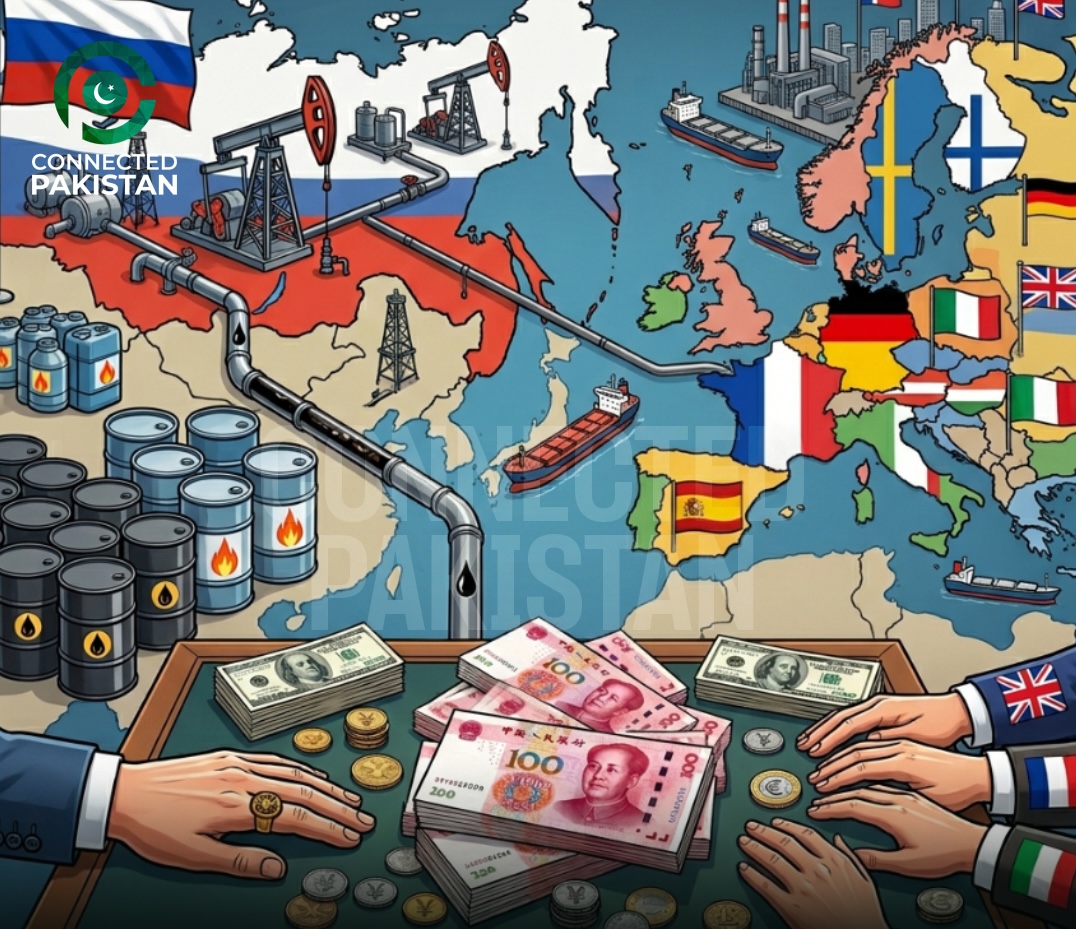
Universal or official policy announcement has been made by the Russian government mandating that all future oil and gas deals with Europe must be priced in Russian Rubles and Chinese Yuan. While viral social media posts have widely circulated this claim, independent fact-checking organizations and official energy reports have confirmed the rumors are misleading. Russia has heavily increased the use of non-Western currencies to bypass economic sanctions, but a blanket mandate covering all future European contracts does not exist.The viral claims stem from a mix of historical trade mandates and Russia’s ongoing, real-world efforts to shift away from the US dollar and Euro.The 2022 Ruble Mandate: In 2022, President Vladimir Putin announced that “unfriendly countries” (including EU members) had to pay for existing natural gas contracts in Russian Rubles. This required European buyers to set up specialized accounts with Gazprombank to convert Euros or Dollars into Rubles.Russia and China have shifted over 99% of their bilateral trade to local currencies (Yuan and Rubles). State-owned giants like Gazprom settle their massive energy contracts to Beijing using a 50/50 split of Yuan and Rubles.
For other buyers like India, Russian officials explicitly state that they operate on a case-by-case basis using “mutually acceptable payment practices” rather than enforces templates.The European RealityEven if Russia attempted to issue a total Yuan or Ruble pricing mandate for Europe, its practical impact would be highly restricted:EU Phased Ban: Under the REPowerEU legal framework, the European Union is systematically banning and phasing out Russian fossil fuels. All new contracts for Russian gas were legally barred as of January 1, 2026, with a final, total ban on Russian liquefied natural gas (LNG) scheduled for late 2026 and pipeline gas by autumn 2027.European buyers that still legally import limited volumes under older contracts (such as firms in Hungary or France) pay based on the specific currency terms locked into those existing, long-term legal agreements. Unilateral changes to currency terms generally constitute a breach of contract.
Note by Alessandro Bazzoni