

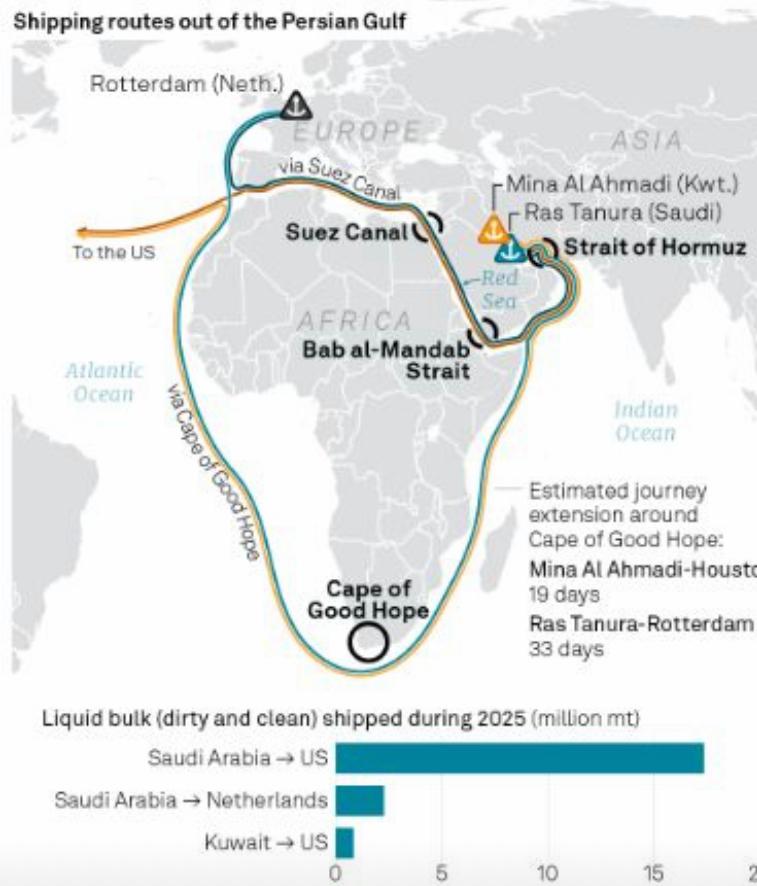
As of mid-March 2026, the intensifying conflict in the Middle East—specifically the US-Israeli war with Iran—has resulted in significant disruptions to global maritime logistics, leading to severe ship rerouting, surging freight rates, and rising fuel costs. The Strait of Hormuz, a vital chokepoint for global oil, has seen traffic plummet by 70% or more following threats and attacks on shipping.
Significant Rerouting and Reduced Traffic
Strait of Hormuz , the waterway has seen traffic drop by over 90% compared to normal levels, with very few vessels attempting to pass. Many ocean carriers have suspended new bookings for the region.
Ships are increasingly rerouting around the Cape of Good Hope, adding 3,500–4,000 nautical miles and 10–14 days to journeys, severely affecting Asia-Europe trade.
Major carriers are using alternative ports such as Jeddah (Saudi Arabia) and Salalah (Oman) and, in some cases, shifting to land-bridge trucking solutions, creating bottlenecks.
Rising Freight and Insurance Costs
Emergency Carriers like CMA CGM and Hapag-Lloyd have introduced “emergency conflict surcharges,” often ranging from $1,500 to $4,000 per container, due to increased operating costs.
Container shipping costs have risen significantly, with some spot rates rising 30% to over 50% for cargo bound for the region, and tanker costs hitting all-time highs.
Insurance for vessels entering the region has skyrocketed, with some war-risk premiums increasing by over 1000%—often costing up to 10% of a vessel’s total value.
Bunker fuel prices (VLSFO) have jumped, with reports indicating a 30% to over 60% surge in key ports like Singapore and Houston as of mid-March 2026.
Rising crude prices, caused by fears of a sustained supply shutdown in the Persian Gulf, are driving up fuel costs for vessels worldwide, not just those in the conflicts.
Vessel “bunching” at alternative hubs like Singapore and regional ports is creating delays.
The combination of longer routes around Africa and, in some cases, cargo being stuck in port, is adding weeks to shipping schedules.
The 10–14 day longer journeys are reducing effective global shipping capacity by 10-15%, worsening equipment shortages.
These disruptions are not only limiting oil and gas supplies—covering roughly one-fifth of global consumption—but are also significantly affecting the transport of fertilizers, manufactured goods, and humanitarian aid
Note by Alessandro Bazzoni