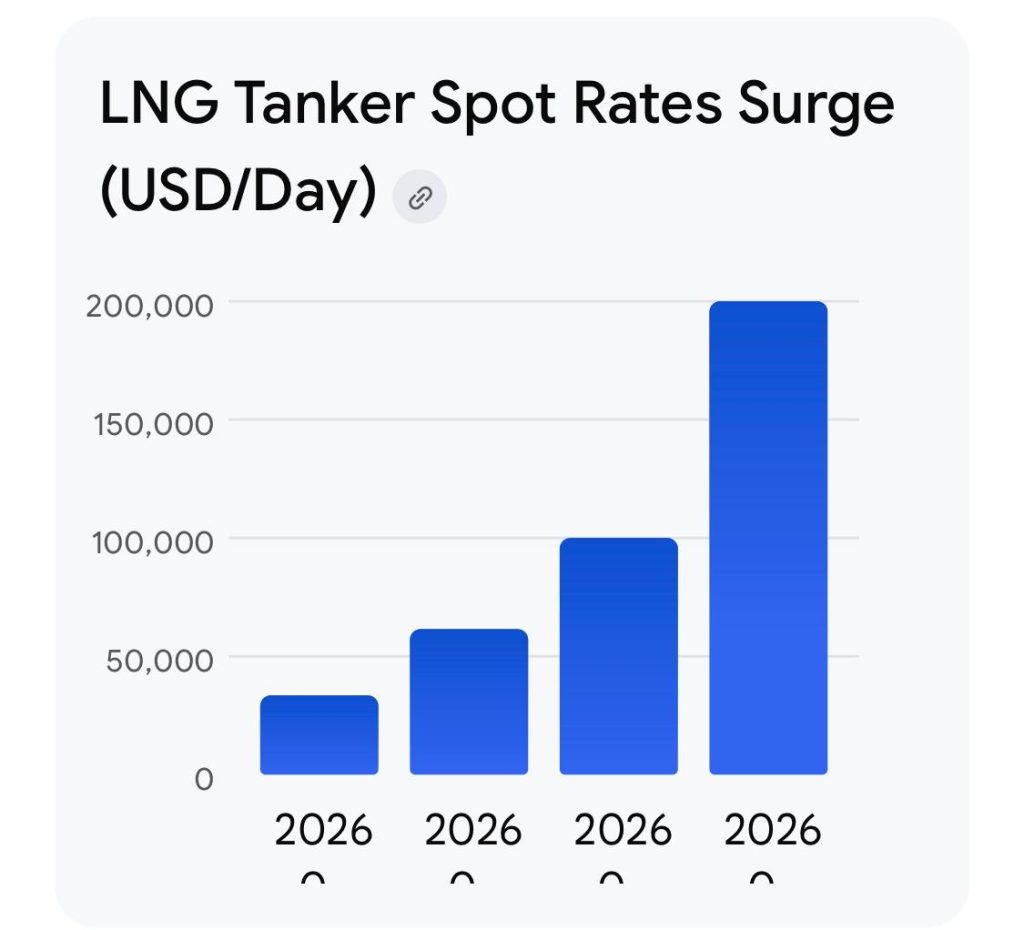
spot charter rates for liquefied natural gas (LNG) tankers in the Atlantic Basin have surged to over $200,000 per day. This represents a doubling of rates in less than 24 hours, triggered by an escalation in the US-Iran conflict and the subsequent shutdown of LNG production by QatarEnergy.
The rapid spike in shipping costs is a direct result of several converging geopolitical and operational factors:
Qatari Production Halt: Following drone attacks and escalating regional tensions, Qatar suspended operations at its Ras Laffan export facilities. This has disrupted roughly 20% of global LNG supply, forcing buyers to scramble for alternative cargoes in the Atlantic.
Strait of Hormuz Closure: Navigation through the Strait has ground to a virtual halt since 28 February 2026. Iranian threats and attacks have led major insurers to scrap war-risk coverage for the Persian Gulf, effectively stranding hundreds of tankers.
Rate Divergence: While actual transactions at the $200,000+ level are still in the “price-discovery” phase, they are more than three times higher than the last benchmark assessment of $61,500 set by Spark Commodities on 2 March 2026.
Global Supply Chain Stress: Asian importers, who receive over 80% of Qatari LNG, are now competing for flexible Atlantic cargoes, driving up shipping demand and costs for longer voyages from the US.
India has already begun rationing gas for domestic industries, while South Korea and Japan have activated emergency plans to secure alternative supplies.
The crisis is not limited to gas; the cost for Very Large Crude Carriers (VLCCs) has hit record highs of roughly $424,000 per day.
Analysts at Wood Mackenzie warn that if the disruption persists, vessel availability for the remainder of March 2026 will be extremely weak, potentially pushing transacted spot rates even higher.
Note By Alessandro Bazzoni