

This delivery marks a critical turning point for both the global iron ore market and the economy of Guinea. Spanning decades of planning, political shifts, and massive infrastructure investments, the progression of the Simandou project carries several key implications:
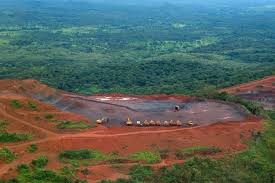
Often referred to as a sleeping giant or the world’s largest untapped high-grade iron ore deposit, the Simandou project faced years of obstacles including legal disputes, infrastructure challenges, and shifting political landscapes. This successful end-to-end delivery by the SimFer joint venture signals that the massive project has effectively transitioned from a concept to a functional commercial reality.
China currently relies on Australia and Brazil for roughly 80% of its iron ore imports. Establishing a consistent flow of high-grade ore from West Africa is a central pillar in Beijing’s long-term strategy to diversify its resource pool and reduce heavy reliance on traditional mining giants.
The iron ore extracted from the Simandou deposit possesses an exceptionally high iron content (averaging over 65%). High-grade ore requires less processing and emits fewer carbon emissions during the steelmaking process, aligning with global efforts to transition toward lower-carbon industrial operations.
Beyond direct mining operations, the project required the massive undertaking of constructing the Trans-Guinean railway corridor—spanning over 600 kilometres—to connect the southeastern mining zone to Atlantic export terminals. The long-term plan, often cited as “Simandou 2040” by Guinean authorities, is designed to channel mining revenues into broad infrastructure, job creation, and industrial scale-up across the country.
With the integrated supply chain active, the next focus for the joint venture will be the execution of a multi-year production ramp-up.
Note by Alessandro Bazzoni