

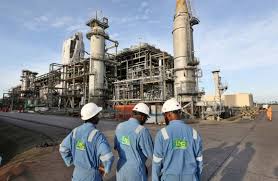
Nigerian Liquefied Natural Gas (LNG) exports are seeing a significant spike in demand and strategic value as of March 2026 due to the conflict in Iran, which has disrupted energy shipments from the Middle East. Global buyers are increasingly turning to Nigeria as a reliable alternative to Middle Eastern suppliers whose shipments must pass through high-risk routes like the Strait of Hormuz.
Impact of the Iran The Nigerian National Petroleum Company (NNPC) reports a “spike in interest” from international buyers looking to diversify away from Middle Eastern supply risks.
Nigeria is positioned outside the immediate conflict zone, offering safer transit routes. It is roughly 10 sailing days from Europe and maintains easy access to both Atlantic and Asian markets.
Supply tightening has caused price surges, particularly in Asia. For example, Nigerian cargoes (like the tanker BW Brussels) have been rerouted from Europe to Asia to capitalize on higher spot prices.
With Iranian and Qatari supplies facing disruptions or delays, African nations like South Africa are also looking to Nigeria to fill fuel supply gaps
The Trans-Saharan Gas Pipeline (TSGP): This $20 billion project aims to transport 30 billion cubic meters of gas annually from Nigeria through Niger and Algeria to Europe. Construction has been fast-tracked due to the urgent need for non-Middle Eastern energy.
The African Atlantic Gas Pipeline (AAGP) what use to be named the Nigeria-Morocco pipeline, this 5,600km project is being positioned as a critical long-term link to Europe, with a final investment decision expected by the end of 2026
Key Countries Increasing Orders
and new buyers are pivoting to Nigeria to replace lost Qatari and Iranian volumes.
India: A primary destination for diverted Nigerian cargoes as it seeks to replace the nearly half of its LPG and massive LNG volumes that previously transited the Strait of Hormuz.
China & Japan: NNPC recently commenced regular Delivered Ex-Ship (DES) LNG shipments to both nations. Japan, in particular, is looking to Nigeria as it rations spot market supplies due to regional instability.
Portugal & Spain: These remain “anchor markets,” with Portugal relying on Nigeria for over 51% of its LNG needs. Both countries have expressed urgent concern over securing their full contracted volumes this winter.
France & Italy: Both have seen Nigerian shipments diverted or increased as they seek alternatives to both Russian and Middle Eastern gas.
South Korea & Taiwan: These energy-intensive economies are “highly exposed” to Middle East disruptions and are actively competing for Nigerian spot cargoes.
The conflict has forced a rapid change in how and where Nigerian LNG travels:
The “Atlantic Pivot” (to Asia): Cargoes originally bound for Europe (e.g., the tanker BW Brussels) are being rerouted in mid-Atlantic. They now travel south around the Cape of Good Hope to reach Asian markets like India and Taiwan, bypassing the Suez Canal and the high-risk Red Sea/Middle East region.
Direct Atlantic Route (to Europe): This remains the most stable route. Shipments from Bonny Island have a direct, roughly 10-day path to European terminals in Spain, Portugal, and France, completely avoiding the conflict zone.
With the Dangote Refinery now at full capacity, Nigeria is also increasing exports of refined products (gasoline, jet fuel) to regional neighbors like Cote d’Ivoire, Ghana, and Togo, as they can no longer rely on traditional shipments from the Gulf.
Traders are rerouting Nigerian gas because Asian spot prices have jumped 39% since the conflict began, making it more profitable to send gas to Asia than to Europe.
To meet this demand, Nigeria is fast-tracking Train 7 (completion 2027) and discussing two additional trains to tap into its 211 trillion cubic feet of proven gas reserves.
Note by Alessandro Bazzoni